Underground Electrical Conductor Failure: Investigating a Lost Phase


Incident Summary: A Newly Energized Facility Loses a Service Phase
Electrical service failures in newly constructed facilities can create difficult questions for insurers, contractors, owners, and risk managers. When equipment operates for a period of time and then begins showing symptoms, stakeholders often need to determine whether the loss resulted from a product defect, an electrical event, installation damage, later construction activity, or some combination of conditions.
This case study examines a forensic investigation involving a failed underground secondary electrical service conductor at a newly completed residential community facility. The issue first became apparent when newly placed pool equipment reportedly operated poorly or intermittently. Follow-up electrical testing identified the loss or degradation of one phase of the facility’s electrical service. A damaged conductor segment was later removed and retained for examination.
The investigation focused on the physical condition of the retained conductor, the location of the reported damage, and whether the observed conditions were consistent with an internal electrical failure, a manufacturing defect, or external mechanical contact.
Background: Delayed Symptoms in an Underground Electrical Service
The subject facility had been energized and operated for several months before the pool equipment was brought online. Once that equipment was placed into operation, personnel reportedly observed poor or intermittent performance from the pool pump. Subsequent testing identified a problem with one phase of the facility’s secondary electrical service.
The affected conductor was reportedly located underground near the utility transformer and within the final approach to the transformer. The installation included a transition from rigid conduit to flexible conduit before reaching the transformer. The damaged conductor was reportedly found within the flexible conduit portion of the installation, at a depth below grade.
After the fault was localized through electrical testing, the area was hand-excavated and the damaged segment was removed. A portion of the conductor was retained for forensic examination. The reported history also indicated that multiple utilities or trades had performed work in the general area. However, the available information did not identify a specific piece of equipment, trade, or individual responsible for contacting the conductor.
For claims professionals, this type of scenario presents a familiar challenge: the service operated for some period of time, the symptoms appeared later, and the damaged component was located underground after multiple parties had worked in the area. The key issue was whether the physical evidence could help narrow the cause of failure.
The Challenge: Determining Why the Electrical Service Conductor Failed
At first glance, a delayed service problem can suggest several possible explanations. A failed phase may raise questions about a surge, overheating, manufacturing defect, improper installation, poor termination, utility-side issues, or physical damage. The fact that the facility had previously operated did not automatically rule out pre-existing damage.
A conductor that has been partially cut, crushed, nicked, or otherwise mechanically damaged may retain some electrical continuity. Depending on the extent of strand damage and the loading conditions on that phase, the defect may not immediately manifest as a complete service failure. In this case, earlier facility loads may not have substantially loaded the affected phase. Once additional equipment was placed into service, the degraded conductor condition became more apparent.
This made the physical examination of the conductor especially important. The forensic question was not simply whether the conductor had failed, but how it failed.
Forensic Examination of the Underground Secondary Conductor
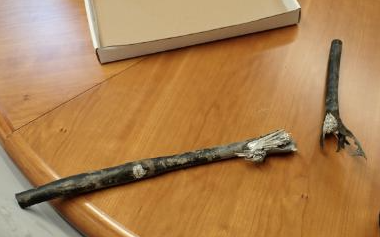
A retained segment of the conductor was examined. The conductor was an unshielded cross-linked polyethylene-insulated cable with aluminum conductor strands. At the time of examination, the retained sample was separated into two sections.
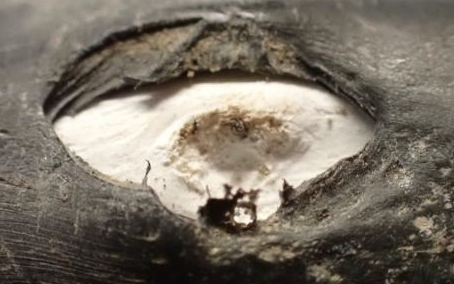
The outer jacket exhibited localized cutting and tearing. In the area of principal damage, portions of the jacket were displaced outward from the conductor. Beneath the jacket, aluminum strands showed localized deformation, longitudinal striations, directional bending, and displacement from the conductor bundle. Some strands terminated in tapered or pointed ends. White debris was also present within portions of the damaged area, obscuring some fracture surfaces.
Physical Evidence of External Mechanical Contact
These physical features were significant. Localized jacket cutting and tearing, outward displacement of the jacket material, directionally bent aluminum strands, and striations on the metallic conductor strands are characteristic of external mechanical contact. They are not typical indicators of a manufacturing defect or an electrical event that originated within an otherwise intact conductor.
Distinguishing Mechanical Damage from Electrical Failure
In an electrical-origin failure, investigators often look for features such as localized melting, arcing damage, bead formation, thermal degradation patterns, or evidence that current flow initiated the damage. In contrast, this conductor showed physical deformation and tearing consistent with a force applied from outside the cable assembly.
Interpreting the Conductor’s Operating History
One important issue was the timing of the damage. Because the facility had operated for several months before the reported symptoms appeared, stakeholders could reasonably question whether the conductor damage occurred during original installation, during subsequent work near the transformer, or during excavation and removal.
The available evidence did not establish exactly when the mechanical contact occurred. It also did not identify the specific equipment or party responsible. However, the operating history did not eliminate the possibility that mechanical damage predated the observed service problem.
How Partial Conductor Damage Can Cause Delayed Symptoms
A partially damaged conductor can function under limited load, especially if enough conductor strands remain intact to maintain partial continuity. As load increases, the damaged area may heat, degrade, separate further, or fail to carry current consistently. In this case, the reported poor or intermittent operation of the pool equipment was consistent with the later identification of a degraded or lost phase.
Limits on Determining When the Conductor Separated
The conductor was separated into two sections when examined. Due to debris within the damage area, strand displacement, and post-removal handling, the inspection could not determine whether complete separation occurred while the conductor was in service or whether final separation occurred during excavation, removal, transport, or subsequent handling.
Findings: External Mechanical Contact Damaged the Conductor
The forensic evaluation supported a clear technical conclusion: the observed damage was consistent with external mechanical contact. The damage was not characteristic of an electrical surge or a manufacturing defect as the initiating cause of failure.
Claim Significance and Limits on Assigning Responsibility
That distinction is important in construction and property claims. Identifying a mechanical damage mechanism can shift the analysis toward installation conditions, construction sequencing, site work, utility coordination, and post-installation activities. At the same time, the inability to identify the specific contacting equipment or responsible party is also meaningful. A defensible forensic opinion should distinguish between what the evidence supports and what remains undetermined.
In this matter, the evidence supported the damage mechanism and general location of the damage within the flexible conduit portion of the electrical service approach. It did not support assigning responsibility to a specific contractor, trade, or event.
Key Takeaways for Underground Electrical Service Claims
-
Delayed symptoms do not rule out earlier mechanical damage. A conductor can remain partially functional until loading conditions change.
-
Physical damage patterns matter. Tearing, striations, directional bending, and displaced strands can help distinguish external contact from internal electrical failure.
-
Underground service failures often require careful separation of cause and responsibility. The mechanism may be clear even when the responsible party is not.
-
Evidence preservation is critical. Retaining damaged components allows examiners to evaluate fracture features, jacket deformation, debris, and conductor strand conditions.
-
Post-removal handling can affect conclusions. Excavation, removal, transport, and storage may further separate or disturb already damaged conductors.
Conclusion: What the Forensic Examination Established
Electrical failures in newly constructed facilities can involve overlapping technical and contractual questions. In this case, a failed secondary service conductor initially presented as an intermittent equipment performance issue and a lost phase. Examination of the retained conductor showed physical features consistent with external mechanical damage, including localized jacket tearing, displaced insulation, bent and striated aluminum strands, and tapered strand ends.
The investigation demonstrated the value of component-level forensic examination in distinguishing between mechanical damage, electrical-origin failure, and manufacturing defect. While the evidence did not establish the specific party or equipment responsible for the damage, it provided a technically supported explanation for the conductor failure and helped clarify the likely failure mechanism for the parties evaluating the claim.
Our experts are ready to help.