CPVC Fire Suppression Pipe Failure Linked to HVAC Refrigerant Leak


A fire suppression pipe ruptured above a closet in an occupied high-rise luxury apartment, releasing fugitive water into the residence and surrounding common areas. Laboratory analysis determined that the failed chlorinated polyvinyl chloride (CPVC) fitting had developed environmental stress cracking after exposure to polyolester (POE) oil. The remaining question was where the POE oil came from and what mechanisms could have caused the contamination.
Envista was retained during litigation to determine the source and cause of the oil contamination. The investigation linked chemical evidence from the failed fitting to the configuration and installation of an adjacent HVAC system. Envista determined that the adjacent HVAC system used a specific type of refrigerant that contains small amounts of POE oil for compressor lubrication, and concluded that an installation-related refrigerant leak released oil near the fire suppression pipe, initiating the cracking that led to the rupture. The resulting report helped the client successfully resolve the matter through settlement.
The Challenge: Reconstructing the Failure
The water loss had occurred approximately three years before Envista's site inspection. The failed tee had already been removed and replaced; the apartment remained occupied, and additional destructive testing of the HVAC equipment would have disrupted the building. Envista therefore needed to reconstruct the failure using the available laboratory findings, photographs, current site conditions, installation records, and the physical relationship between the two building systems.
Several potential explanations required evaluation. The fitting could have been contaminated before installation, the fire suppression material could have been unsuitable for the application, or oil could have escaped from the nearby HVAC equipment during or after construction. Determining which scenario fit the evidence was central to identifying responsibility for the loss.
Our Investigation
Envista inspected the apartment and the crawlspace above the closet where the rupture occurred. The fire suppression system consisted of one-inch Schedule 40 CPVC piping. An air handler and its R-410A refrigerant lines were installed immediately beside the failed tee location. The nearest HVAC component was a flowrater valve and its copper connections, located within approximately 12 inches of the failed fitting.
The investigation included a review of the prior laboratory analysis, HVAC installation guidance, relevant refrigeration and brazing standards, site photographs, and the observed condition of the refrigerant piping. Envista examined the flowrater's threaded connection and brazed copper stub, evaluated visible irregularities at the brazed joint, and reviewed the manufacturer's recommended nitrogen and soap-solution leak test. No documentation confirmed the connection passed the recommended test before the system was charged.
Marks consistent with torch exposure were also present near brazed refrigerant lines in multiple areas of the building. A controlled comparison using a torch near similar CPVC pipe produced marks resembling those observed in the field. These observations did not by themselves identify the oil leak, but they provided evidence that installation practices around the refrigerant piping required closer scrutiny.
Laboratory Evidence of Chemical Exposure
Laboratory examination of the failed tee identified environmental stress cracking. Fourier transform infrared (FTIR) spectroscopy and gas chromatography mass spectrometry identified POE oil on the pipe exterior and within the damaged area. The crack pattern showed that chemical exposure progressed inward from the fitting exterior.
POE oil commonly lubricates compressors in systems charged with hydrofluorocarbon refrigerants such as R-410A. Because the oil mixes with the refrigerant, it circulates throughout the sealed refrigerant circuit. The lubricant performs an essential function inside the HVAC system, but contact with CPVC can initiate environmental stress cracking and progressively weaken the material.
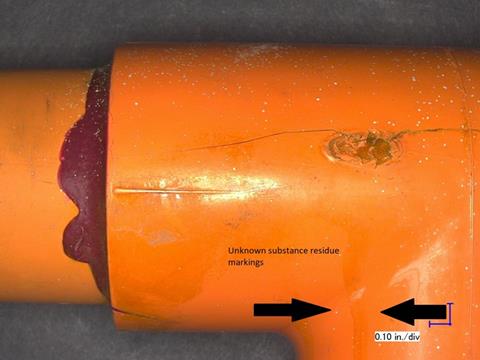
Laboratory image documenting residue markings on the exterior of the failed CPVC tee
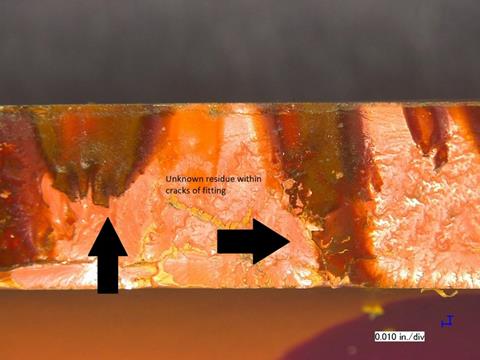
Microscopic view documenting residue within cracks in the failed fitting
Identifying the Source of the POE Oil
The evidence supported the adjacent HVAC system as the oil source. The R-410A circuit contained polyolester oil, the flowrater connection was the closest HVAC component to the failed tee, and laboratory testing had confirmed oil drip markings on the pipe exterior. A leak from the pressurized refrigerant line could propel an oil and refrigerant mixture outward, allowing it to reach the nearby CPVC fitting.
Envista localized the leak origin to the area where the HVAC unit connected to the refrigerant piping, either at the brazed copper connection or the adjacent threaded connection on the flowrater body. The observed condition of the brazed joint and the broader evidence of poor brazing practices supported an installation-related leak.
The investigation found no indication that the specified CPVC product was unsuitable for the building's fire suppression system. Preinstallation contamination also did not align with the evidence. Polyolester oil is not normally used in the manufacture or distribution of CPVC components, the contamination was localized, and no comparable failures were reported among other fittings at the property.
The fitting geometry helped explain why the tee ruptured while adjacent straight pipe did not. Injection molding introduces residual stress into a tee, and the sprinkler assembly placed additional load on the fitting. These stresses made the contaminated tee more susceptible to environmental stress cracking than the adjoining extruded pipe.
Results and Impact
Envista's analysis established a coherent failure sequence. An installation error at the nearby HVAC refrigerant connection allowed R-410A refrigerant and polyolester oil to escape. The oil contacted the exterior of the CPVC tee and initiated environmental stress cracking. Under the existing stresses in the molded and loaded fitting, the cracks progressed until the tee ruptured and released water into the apartment.
The report distinguished an HVAC installation-related cross-system interaction from a defective fire suppression product or preinstallation contamination. That distinction gave the client's legal team a technically supported explanation of causation and responsibility. The findings contributed to a successful settlement of the litigation.
Lessons for Property and Claims Professionals
- Adjacent building systems can create unexpected failure pathways. Install refrigerant piping and CPVC fire suppression components with sufficient separation and protection from incompatible chemicals.
- Installation and commissioning records matter. Documented leak testing can confirm that threaded and brazed refrigerant connections were sound before you put a system into service.
- Chemical analysis can connect physical damage to its source. Preserving failed components and documenting residue patterns may be critical when contamination is no longer present on site.
- A delayed investigation can still produce defensible conclusions when you evaluate laboratory results, site geometry, installation evidence, and alternative-cause analysis together.
Our experts are ready to help.