Solar Hail Damage in PV Systems: Design Factors, Failure Modes, and Field Diagnostics

Hail is a significant weather-related risk for photovoltaic (PV) systems. As solar installations expand, asset owners, insurers, and developers are increasingly confronted with questions about solar hail damage, module resilience, and post-storm performance losses.
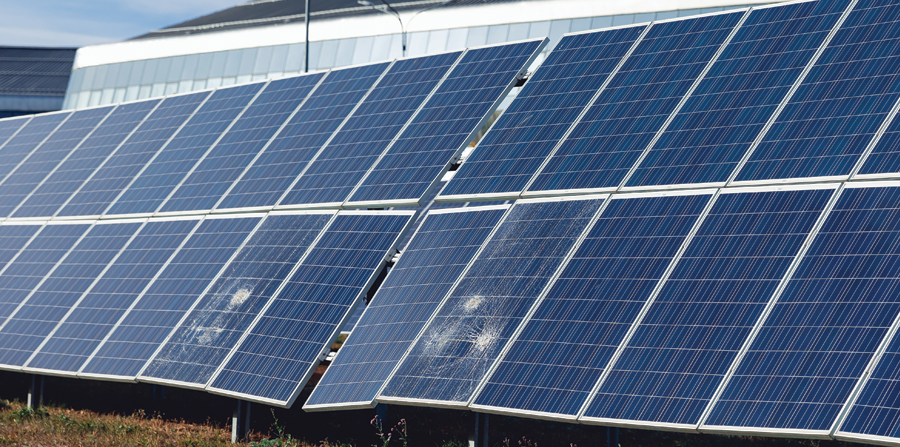
When hail impacts a solar array, damage is not always immediately visible. While shattered glass is easy to identify, more subtle issues, such as cell microcracking or disruption of electrical pathways, can degrade system performance without obvious signs. Determining whether hail caused functional damage requires a detailed understanding of solar module design, failure mechanisms, and field diagnostic methods.
Solar Module Architecture and Hail Risk
Modern photovoltaic modules are laminated composite structures designed to convert sunlight into electricity while withstanding decades of environmental exposure. A typical crystalline silicon module contains thin silicon cells connected in series and encapsulated between protective layers that include polymers, tempered glass, and a polymer or glass backsheet. An aluminium frame provides structural support, while the junction box houses electrical connections and bypass diodes.
Each layer contributes to module durability, but architecture also introduces potential vulnerabilities during impact events. Silicon cells are extremely thin (often around 0.1 millimetres) and inherently brittle. When hail strikes a module, the tempered glass may absorb part of the energy, but impact forces can still transmit through the encapsulant layers to the cells beneath.
In severe cases, hail can fracture the glass surface. Even when the glass remains intact, internal damage may occur. Microcracks in the cells can interrupt electrical pathways and reduce current flow, leading to measurable losses in module output.
Because PV modules are typically wired in series strings, damage affecting a single module can influence the performance of an entire string. This means localised hail impacts can produce system-level performance losses.
Cell Technology and Impact Response
Cell technology influences how modules respond to mechanical stress.
Most modern PV modules use monocrystalline silicon cells, which are produced from single-crystal ingots. These cells offer higher efficiencies and consistent electrical performance compared with earlier polycrystalline technologies. However, the underlying silicon remains brittle, and mechanical impacts can still generate microfractures.
Advances such as Passivated Emitter and Rear Cell (PERC) technology improve energy conversion efficiency but do not fundamentally alter the mechanical characteristics of the silicon wafer. As a result, even highly efficient modules remain susceptible to impact-related damage under severe hail conditions.
Failure Modes Associated with Hail Impacts
Hail can produce several types of module damage. The most visible is a glass fracture, where the tempered glass surface cracks or shatters after impact.
More subtle damage may occur within the module structure. Microcracks in the silicon cells can develop beneath the glass without obvious surface indicators. These fractures disrupt electrical continuity and increase resistance within the circuit, reducing power output.
Impact forces may also damage interconnect ribbons that link cells together, leading to localised heating or “hotspots.” In some cases, encapsulant layers may delaminate, compromising structural integrity and electrical isolation.
Because many of these failure modes are not visible during routine inspections, identifying hail-related damage often requires specialised diagnostic testing.
Hail Testing and Standards
Solar modules are designed and tested to meet international durability standards, most notably IEC 61215 and IEC 61730.
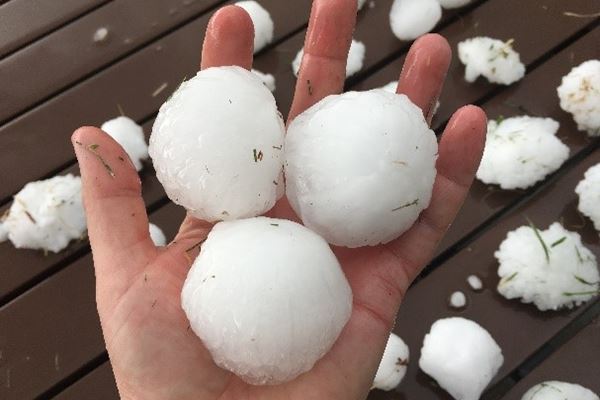
IEC 61215 includes a hail resistance test in which ice balls approximately 25 millimetres in diameter are fired at the module at a defined velocity. After testing, modules are inspected to confirm that they maintain electrical insulation and acceptable power output.
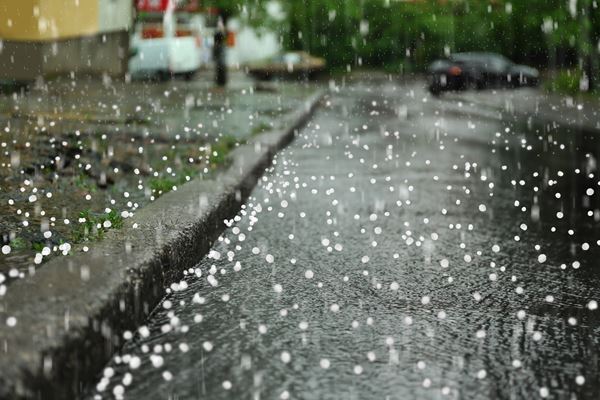
While these standards establish baseline durability requirements, actual hail events may exceed laboratory test conditions. Variations in hailstone size, velocity, and impact angles can produce stresses that differ significantly from those in standardised tests.
Manufacturers may enhance impact resistance through design modifications such as thicker glass, glass-glass module configurations, or alternative encapsulant materials. Nevertheless, real-world performance during severe weather events can vary depending on installation conditions and module construction.
Diagnosing Solar Hail Damage
Following a hailstorm, determining whether PV modules have suffered functional damage requires a structured investigative approach. Visual inspection alone rarely provides a complete assessment.
Engineers typically begin with site inspections to identify obvious damage such as broken glass, frame deformation, or mounting issues. Electrical testing can then reveal deviations in insulation resistance, current flow, or module performance.
Advanced diagnostic techniques are often necessary to detect hidden defects. Infrared thermography can identify hotspots caused by damaged cells or high-resistance connections, while electroluminescence imaging can reveal microcracks and electrical discontinuities that are not visible through conventional inspection.
Weather data analysis may also be used to correlate site conditions with the observed damage, helping determine whether the storm produced hail large enough to affect the modules.
Distinguishing Hail Damage from Other Degradation
One of the challenges in post-storm investigations is separating hail-related damage from other sources of performance loss.
PV modules naturally degrade over time, typically experiencing gradual reductions in output over their operational life. Manufacturing variability, transportation damage, installation stresses, or environmental exposure can also contribute to defects unrelated to hail impacts.
A comprehensive assessment, therefore, combines diagnostic testing, historical performance data, and an understanding of module design and manufacturing characteristics. This evidence-based approach helps determine whether a hail event caused measurable damage and whether remediation is necessary.
Protecting Solar Asset Performance
As photovoltaic systems continue to expand globally, managing weather-related risk is becoming increasingly important for solar asset owners and operators.
Understanding how module architecture responds to impact, how damage develops, and how to diagnose hidden defects allows stakeholders to make informed decisions following severe weather events. Structured forensic investigations provide clarity about the cause of performance losses and help determine the most effective remediation strategies.
With the appropriate combination of engineering expertise, diagnostic tools, and data analysis, stakeholders can confidently evaluate hail-related damage and protect the long-term performance of photovoltaic assets.
Our experts are ready to help.