Elevator Failure Investigation: Targeted Repair vs. Full Modernization


Commercial property losses involving aging building systems commonly raise an important question: does a failure require a complete upgrade, or can the damaged equipment be repaired using targeted replacement? Determining the answer can have major implications for claim evaluation, repair strategy, and business continuity.
This case study examines a commercial elevator failure that initially appeared to support a full modernization project. A forensic engineering investigation, however, identified a more specific cause of loss and clarified the scope of repairs actually required.
Commercial Elevator Failure and Smoke Event
A multi-story commercial building experienced a sudden elevator outage after occupants reported smoke originating from the elevator system. The event prompted emergency response personnel to visit the property and took the elevator out of service. Building representatives subsequently received recommendations that ranged from component replacement to complete modernization of the elevator system.
The elevator itself was an older hydraulic unit that had been in service for decades. Prior to the loss event, maintenance personnel had recently performed repairs in response to operational issues. Shortly after those repairs, the elevator became inoperable again. Soon after, smoke was observed coming from the hydraulic oil reservoir area, leading stakeholders to question whether the entire elevator system had reached the end of its useful life.
Situations like this are common in property and insurance claims. When older equipment fails, there is often an assumption that modernization is unavoidable. However, determining the actual cause of failure requires a thorough technical assessment, not reliance on age or appearance alone.
Forensic Investigation of the Elevator System
During the engineering inspection, investigators examined the elevator machine room, hydraulic equipment, motor components, and electrical controls. Visual observations showed signs of overheating within the system. Condensation from oil vapors was present around equipment in the machine room, and the hydraulic oil itself appeared darkened and thermally degraded. These conditions were consistent with excessive heat generation inside the hydraulic system.
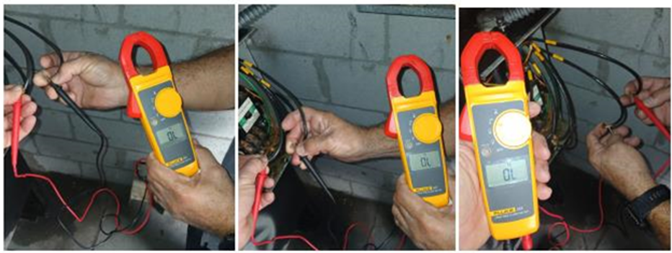
One key aspect of the investigation involved electrical testing of the elevator motor. Resistance testing revealed open-circuit conditions in the motor windings, indicating the windings had been damaged. Open windings are commonly associated with severe overheating, which can degrade insulation and permanently damage the motor's conductive pathways.
Identifying the Cause of the Elevator Failure
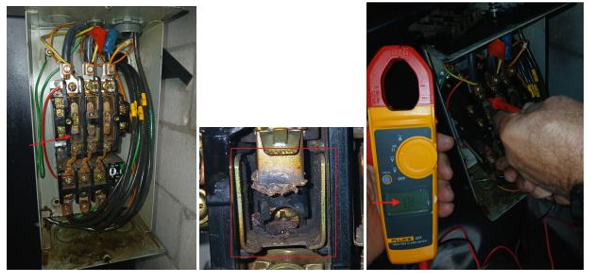
Additional examination identified damage within the motor starter assembly. We observed a burned electrical contact on one phase of the starter. This seemingly localized failure proved to be a critical finding. In a three-phase motor system, losing one phase can create a single-phasing condition. Under these circumstances, the motor continues attempting to operate while drawing excessive current, causing substantial heat and placing significant stress on the remaining electrical windings.
The combination of testing results and physical evidence enabled investigators to reconstruct the sequence of events. The damaged starter contact created a single-phase operating condition. The motor then drew elevated current, overheated, and sustained winding damage. Because the motor was immersed in the hydraulic oil reservoir, excess heat transferred directly into the oil, causing thermal degradation and smoke.
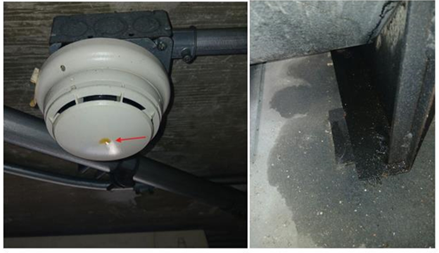
Visual documentation collected during the investigation included evidence of vapor deposits near machine room devices, motor winding testing, and the damaged starter contact that contributed to the failure mechanism.
Elevator Repair vs. Full Modernization
Once the cause of loss was established, focus moved to determining the appropriate scope of repairs.
A proposal had been developed recommending full modernization of the elevator system. While the proposed modernization costs were considered reasonable for the work described, forensic review concluded that the recommended scope extended well beyond the damage observed during the investigation.
The engineering analysis found that the loss-related damage was limited primarily to three components:
- The elevator motor
- The motor starter
- The hydraulic oil
These components were directly affected by the overheating event and were necessary to restore operation after the incident.
Code Requirements for Like-for-Like Elevator Repairs
A key factor in the evaluation was building code and regulatory requirements. Stakeholders believed that recent elevator regulations automatically required modernization whenever major repairs were performed. However, the investigation determined that replacing the damaged motor, starter, and hydraulic oil constituted a like-for-like repair. In other words, the damaged components could be replaced with equivalent components performing the same function without automatically triggering complete system modernization.
This distinction matters for claims professionals, property owners, and risk managers. Regulatory requirements may impose certain upgrades on existing elevators, but those requirements do not necessarily transform every repair project into a modernization effort. Before drawing that conclusion, carefully review the applicable code provisions and the actual scope of loss.
Key Lessons for Property and Claims Professionals
This investigation offers several useful lessons forommercial property losses involving mechanical and electrical systems.
First, the apparent severity of a loss does not always reflect the extent of required repairs. Smoke, equipment age, and operational disruption might make it seem like an entire system has failed when the root cause may be limited to a few components.
Second, forensic analysis provides valuable insight into failure mechanisms. By combining visual observations, electrical testing, and system knowledge, engineers can distinguish between primary damage and unrelated deficiencies, helping stakeholders make informed decisions.
Third, modernization and repair are not interchangeable concepts. Even when equipment is older, the appropriate remedy must be based on the actual damage sustained, applicable codes, and the technical requirements necessary to restore operation.
How Forensic Engineering Clarified the Repair Scope
The investigation determined that the elevator outage resulted from an electrical failure within the motor starter that created a single-phasing condition. The resulting overheating damaged the motor windings and degraded the hydraulic oil, ultimately producing the smoke event that prompted concern among building occupants. While a complete modernization project had been proposed, the forensic evidence demonstrated that a targeted repair involving replacement of the damaged motor, starter, and hydraulic oil was sufficient to address the observed loss.
For property owners, insurers, adjusters, and risk professionals, this case reminds us that comprehending the true cause of loss is essential before defining the scope of restoration. Careful forensic evaluation can help separate necessary repairs from elective upgrades, supporting technically sound and economically justified claim outcomes.
Our experts are ready to help.