Turbine-Generator Bearing Wear: How Misalignment Contributed to Damage


Diagnosing a turbine-generator bearing problem can be difficult when warning signs point to multiple potential causes. In this case, a forensic engineering investigation examined whether operating conditions, maintenance practices, equipment design, or installation factors contributed to the damage.
This case study examines bearing damage within a relatively new gas turbine power generation system. What initially appeared to be a bearing issue turned out to be more complex, involving equipment alignment, support structures, and installation practices. The findings offer lessons for facility owners, insurers, risk managers, and engineers responsible for rotating equipment reliability.
The Challenge
A combined turbine-generator installation at an industrial power facility began generating repeated alarms from its lubrication monitoring system. Over several weeks, the monitoring equipment detected metallic debris circulating in the lubrication oil, indicating abnormal wear somewhere within the rotating assembly. As the alarms persisted, operators removed the turbine from service and performed an emergency inspection.
The turbine had accumulated approximately 18,500 operating hours since entering service and had generally performed as expected. However, inspection of the lubrication system confirmed bearing material, indicating deterioration in the power turbine bearing assembly. Given the potential consequences of a catastrophic rotating equipment failure, the turbine was removed and sent for detailed examination.
While the original focus was on the bearing damage, additional issues emerged during disassembly. Technicians encountered unexpected difficulties separating the turbine from the generator, and further examination raised concerns about the alignment of the power generation train. These observations expanded the forensic investigation beyond the failed bearing components.
The Investigation
The investigation included site inspections, review of maintenance and construction records, interviews with project stakeholders, and examination of the turbine-generator system after removal and repair activities. The engineering team evaluated the mechanical relationship between the turbine and generator and considered whether operating conditions could have contributed to the reported damage.
Visual inspections identified an unusual support arrangement beneath both the turbine and generator skids. The equipment was mounted using conical vibration isolation mounts with rubber damping elements. These mounts are commonly used in marine applications where vibration isolation is a priority. Investigators considered whether such a flexible mounting system was appropriate for a stationary power generation installation requiring precise shaft alignment.
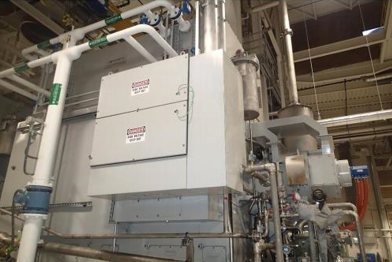
Turbine-generator installation at the industrial power facility
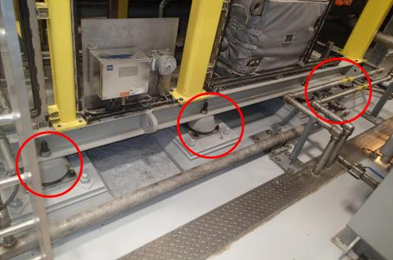
Conical vibration isolation mounts beneath the equipment skid
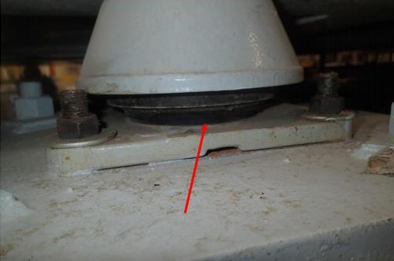
Close-up view of a vibration isolation mount
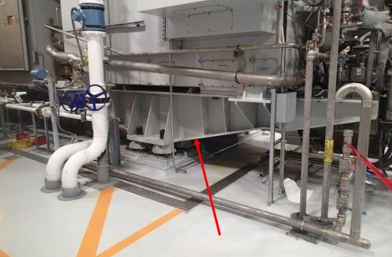
Support structure beneath the generator
Another significant discovery involved the equipment installation history. Records indicated that multiple parties participated in construction and commissioning. Although alignment activities reportedly occurred before the unit entered service, investigators could not locate comprehensive alignment documentation or formal acceptance records showing that turbine-generator alignment was verified within required tolerances during commissioning.
The lack of documentation did not necessarily prove that misalignment existed at startup. However, it limited the ability to validate the system’s original configuration or determine whether alignment conditions changed over time.
Further investigation revealed that the generator and support structure were not level when maintenance teams performed subsequent work. Corrective leveling and alignment work was completed, after which the system reportedly operated as expected. This finding suggested that alignment conditions likely contributed significantly to the observed mechanical issues.
Identifying the Root Cause
Rotating equipment depends on precise alignment between interconnected shafts. Even relatively small deviations can increase vibration levels, create abnormal bearing loads, accelerate wear, and reduce equipment life. In severe cases, misalignment can lead to bearing failures, coupling damage, overheating, and unplanned outages.
Based on the evidence collected, investigators concluded that the bearing damage was consistent with misalignment between the turbine shaft and generator shaft. The lubrication monitoring system identified metallic debris resulting from progressive bearing deterioration caused by these abnormal loading conditions.
Determining exactly when the misalignment originated proved more difficult. The available evidence suggested two plausible scenarios.
First, construction or commissioning may have introduced alignment issues. Because documented alignment results were unavailable, we could not rule out this possibility.
Second, the flexible conical mounting system may have allowed movement within the equipment support structure over time. The rubber-damped mounts were less rigid than traditional stationary equipment foundations and may have contributed to gradual shifting of the turbine-generator relationship during service. Investigators concluded that the mounting arrangement could have caused or exacerbated the misalignment condition that ultimately resulted in bearing damage.
The investigation found no evidence of manufacturing defects within the turbine or generator. Instead, the failure mechanism pointed to installation and support-system factors that affected alignment accuracy throughout the equipment's operating life.
Lessons for Risk Managers and Facility Owners
This investigation highlights several lessons applicable to industrial facilities operating rotating equipment.
Proper alignment documentation is essential. Alignment records establish a baseline and provide a valuable reference when troubleshooting future mechanical issues. Without this information, it becomes much harder to determine whether conditions have changed over time.
Evaluate support structures and mounting systems as part of overall equipment reliability. While vibration isolation may offer benefits in some applications, any mounting system must also maintain the stiffness and positional stability required for long-term shaft alignment.
Condition monitoring systems proved instrumental here. The lubrication monitoring equipment detected metallic debris before the bearing damage progressed into a more significant failure event. Early warning systems give facilities an opportunity to intervene before major damage occurs.
Bearing damage should not always be viewed as an isolated component issue. Often, the failed bearing is the visible symptom of a larger mechanical problem elsewhere in the system.
Conclusion
What began as an investigation into bearing wear ultimately revealed a broader alignment-related reliability issue within a turbine-generator installation. Through site inspections, equipment evaluation, and review of installation history, investigators determined that shaft misalignment was the most probable cause of the bearing damage. Evidence further suggested that the equipment mounting arrangement may have contributed to the misalignment developing over time.
For organizations responsible for critical rotating machinery, the case serves as a reminder that successful operation depends on more than the health of individual components. Proper installation, verification, documentation, and long-term structural stability are equally important factors in ensuring reliability and avoiding costly equipment failures.
Our experts are ready to help.