Lithium-Ion Battery Technology, Safety in BESS and EV Charging Stations


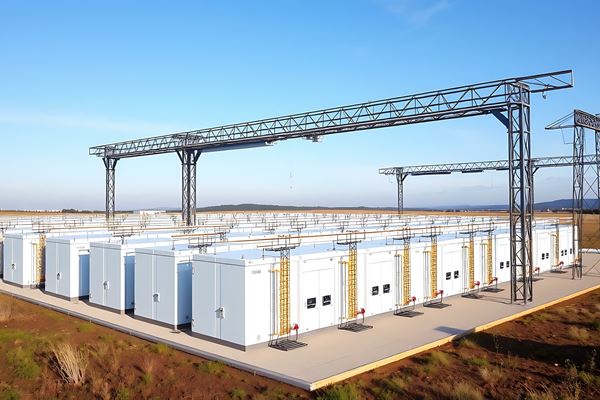
Battery energy storage systems (BESS) have become integral to modern energy grids, providing stability, efficiency, and cost optimization in energy distribution. These systems store energy produced from hydro, wind, solar, gas, or oil generation and discharge it when demand is high. By charging during off-peak, lower-cost periods and discharging during peak demand, BESS reduces strain on the grid and improves overall energy economics. As renewable energy adoption increases and electric vehicle (EV) usage expands, the deployment of BESS continues to accelerate across utility, commercial, and industrial applications.
At the core of most BESS installations are lithium-ion batteries. These batteries are widely used due to their high energy density, long cycle life, and relatively low self-discharge rates. A typical lithium-ion cell has a nominal voltage of approximately 3.6 to 3.7 volts and consists of an anode, cathode, and electrolyte that facilitate ion movement during charge and discharge cycles. While highly efficient, the concentration of stored energy within these cells creates inherent safety risks that must be carefully managed.
Thermal Runaway and Battery Hazards
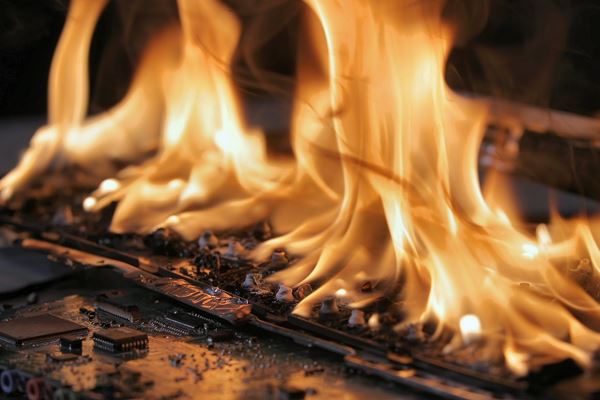
Lithium-ion batteries can experience thermal runaway if subjected to overcharging, overheating, internal short circuits, manufacturing defects, or physical damage. Thermal runaway is a self-sustaining chemical reaction in which cell temperatures rapidly increase, potentially leading to fire or explosion.
These events present unique hazards. Lithium-ion battery fires can generate their own oxygen through chemical decomposition, reducing the effectiveness of traditional smothering techniques. Thermal runaway may release flammable gases such as hydrogen (H2), methane (CH4), carbon monoxide (CO) and ethylene (C2H4). In enclosed or partially enclosed environments, gas accumulation can create deflagration or explosion hazards if ignition occurs. Additionally, damaged cells may experience delayed re-ignition hours or even days after initial suppression, requiring extended monitoring and specialized response protocols.
To mitigate these risks, modern systems incorporate Battery Management Systems (BMS) that continuously monitor voltage, temperature, current, and state of charge. If abnormal conditions are detected, the BMS can isolate affected modules, limit charge/discharge rates, or initiate cooling measures to prevent escalation and send alarm notifications to monitoring stations.
Cooling Systems and Environmental Stress
Advancements in battery pack design, including lithium-magnesium oxide technologies and higher-density configurations, have improved performance but introduced additional challenges. Effective cooling systems are essential to prevent overheating, particularly in high-capacity applications such as mining equipment, heavy industry, and grid-scale storage.
Many systems utilize liquid cooling mechanisms similar to automotive radiators. However, installations operating in harsh or vibration-prone environments may experience mechanical degradation. For example, vibrations can loosen cooling clamps, leading to coolant leaks. If conductive coolant contacts energized battery components, electrical tracking may occur, potentially resulting in fire. These scenarios underscore the importance of robust mechanical design, vibration-resistant fittings, and routine inspection protocols.
Regulatory Standards and System-Level Safety
The growing deployment of BESS has prompted the development of rigorous regulatory standards. In the United States and Canada, NFPA 855 (Standard for the Installation of Stationary Energy Storage Systems) establishes installation requirements for stationary energy storage systems, addressing fire protection, separation distances, maximum allowable energy capacity per enclosure, and emergency response planning. Compliance now requires testing per UL 9540 and UL 9540A (Test Method for Battery Energy Storage Systems (BESS)). UL 9540A testing evaluates how a battery system behaves under failure conditions and tests fire suppression design and spacing requirements.
Large-scale BESS installations often consist of multiple battery racks connected in parallel to create high-voltage DC buses that may exceed 1,000 volts DC. Fire suppression systems—such as water-based sprinklers, clean agents, or dry chemical systems—are typically required. Strategic placement, spacing, and containment are critical to limiting fire propagation between units.
Historical incidents have influenced these standards. A 2019 battery storage explosion in Arizona highlighted the dangers of gas accumulation and the need for specialized responder training. Similarly, the Moss Landing Power facility fire in California demonstrated how insufficient containment and separation between battery units can allow fires to propagate extensively, resulting in prolonged incidents and community disruption.
Lithium-Ion Battery Manufacturing and Transportation
The global lithium-ion battery supply chain remains concentrated in Asia, particularly China and South Korea, though North American manufacturing capacity continues to expand. Given the risks associated with lithium-ion chemistry, transportation regulations require batteries to be shipped at a reduced state of charge—typically around 30 percent. Lowering the state of charge reduces the energy available to fuel a thermal event if damage occurs during transit.
International standards, including UN 3091 testing, require batteries to undergo vibration, impact, thermal cycling, and altitude simulation tests before shipment. These safeguards are critical due to the scale of global battery transport and the consequences of in-transit failures.
Electric Vehicles and Charging Infrastructure
Electric vehicles utilize lithium-ion battery packs composed of numerous cells connected in series and parallel to achieve the required voltage and capacity. These battery packs are often mounted within the vehicle undercarriage to maintain a low center of gravity and are engineered with structural protection to reduce damage during collisions. EV batteries rely on BMS technology to maintain safe operating conditions. BMS log files can be checked to see the health and charging history of the battery pack.
Types of EV Chargers
EV chargers are generally categorized into three levels:
- Level 1: Operates on a standard 120-volt household outlet and provides slow charging, typically used for low-demand or emergency charging (Charging time: 3-5 miles per hour).
- Level 2: Operates on 240 volts and is common in residential and commercial installations, typically charging a vehicle within four to six hours, depending on battery capacity (Charge time 12-60 Miles per hour).
- DC Fast Chargers: Primarily installed in commercial and highway settings, these systems convert incoming AC, normally 3 Phase power to DC and deliver high-voltage direct current directly to the vehicle’s battery, enabling rapid charging in approximately 20 to 30 minutes (Charging Time: 60-80 Miles per hour)
Unlike Level 1 and Level 2 chargers, DC fast charging systems involve complex power electronics and thermal management systems as well as an internal battery pack to deliver a significant amount of energy in a short period.
installation, making system design, commissioning, and ongoing maintenance critical.
Electrical Codes and Installation Requirements
In addition to fire safety standards, EV charging installations must comply with electrical codes. In the United States, the National Electrical Code (NFPA 70), specifically Article 625, governs the installation of electric vehicle supply equipment (EVSE). The Canadian Electrical Code CSA C22.1 includes Section 86 addressing EV charging systems.
These codes require dedicated branch circuits, appropriate overcurrent protection, proper grounding and bonding, and safeguards against physical damage. Installations in enclosed spaces may require ventilation provisions to address potential gas accumulation. Failure to comply with electrical code requirements has been a contributing factor in several charging-related incidents.
Connection standards also vary. Tesla utilizes a proprietary connector design, while many other manufacturers use the Combined Charging System (CCS). The use of uncertified or aftermarket adapters introduces additional risk. Charging systems are engineered to operate within specific electrical and communication parameters, and unauthorized adapters may bypass protective controls or create improper electrical connections, increasing the likelihood of short circuits, overheating, or arc faults.
Conclusion
Battery Energy Storage Systems (BESS) and electric vehicle charging infrastructure are central to modern energy strategy, supporting grid resilience, renewable integration, and transportation electrification. However, lithium-ion technology concentrates significant energy within compact systems, creating hazards that require disciplined engineering design, rigorous regulatory compliance, and proactive maintenance.
Effective risk mitigation depends on understanding battery chemistry, system architecture, cooling design, electrical protection, and evolving standards such as NFPA 855, UL 9540, CSA C22.1 (Section 86) and NFPA 70 (Article 625). As adoption continues to expand, collaboration among manufacturers, installers, utilities, regulators, insurers, and emergency responders will be essential to ensuring these systems operate safely while delivering their intended economic and environmental benefits.
Our experts are ready to help.